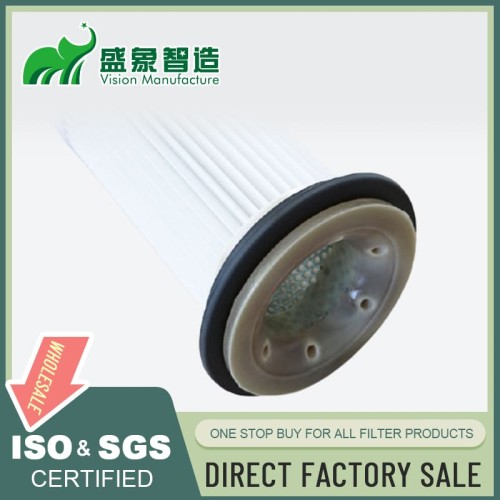

IoT-Enabled Air Purifiers: Indoor Air Quality Improvements in Pakistani Textile Factories
Introduction
EHS managers and plant engineers in Pakistani textile factories often face poor indoor air quality from fiber dust, dyes, and chemicals, leading to health risks (respiratory issues per OSHA-equivalent standards), productivity losses, downtime, and non-compliance with NEQS emission limits. Traditional purifiers are static and inefficient for variable loads. IoT-enabled air purifiers provide real-time monitoring and auto-adjustment, improving IAQ by 50–70%. This article explores 2026 IoT trends for Pakistani textile air purifiers, covering benefits, applications, real outcomes, and implementation tips for health and compliance.
IoT-Enabled Air Purifiers for Indoor Air Quality Improvements in Pakistani Textile Factories
Pakistan's textile industry, a major exporter, generates dust and vapors in spinning, dyeing, and weaving. IoT purifiers integrate sensors (PM2.5, VOC, humidity) with AI for dynamic filtration, reducing pollutants by 60% (per 2026 reports) and supporting NEQS standards in factories like those in Faisalabad or Karachi.
Key Benefits of IoT-Enabled Air Purifiers in Textile Factories
IoT enhances IAQ:
- Real-Time Monitoring: Sensors detect dust spikes, alerting via app.
- Auto-Adjustment: AI optimizes fan/filter for 50% better efficiency.
- Health Improvements: Reduce respiratory risks by 70%.
- Remote Control: Cloud access for multi-site management.
- Compliance Support: Automated logs for NEQS audits.
- Cost Reduction: Cut energy by $80k+/year in maintenance.
In Pakistan's humid factories, IoT supports reliable IAQ and sustainability.
Applications in Pakistani Textile Factory IAQ
IoT purifiers apply to spinning halls (fiber dust), dyeing rooms (VOC), and weaving areas (particulates) where variable loads occur. They aid Pakistan's textile export, meeting NEQS PM2.5 limits while optimizing energy in expanding facilities like Lahore or Sialkot.
Real-World Case Example
A textile factory in Pakistan had high dust causing health complaints and NEQS warnings.
They installed IoT-enabled purifiers with PM/VOC sensors and AI. Results:
- IAQ improved by 60% (PM2.5 below 25 μg/m³).
- Health incidents reduced by 70%.
- Energy use cut by 30% via auto-adjust.
- Annual savings ~$90,000 in health/energy/fines.
- NEQS compliance achieved with zero violations.
Recent Industry Context
The global industrial dust collector market is projected to grow at a CAGR of 5.0–5.4% from 2026 to 2030, according to 2026 reports from Grand View Research, Mordor Intelligence, and ResearchAndMarkets, with IoT-enabled purifiers adoption accelerating in Pakistan's textiles for IAQ under NEQS and sustainability goals.
Practical Recommendations
To implement IoT-enabled purifiers for IAQ:
- Assess Pollutants: Measure PM2.5/VOC in key areas.
- Choose Sensors: For dust/humidity with AI integration.
- Match to System: Ensure purifier size and flow for factory layout.
- Optimize Placement: High-dust zones like spinning halls first.
- Pilot Test: One room to measure IAQ/ROI.
- For distributors: Offer IoT purifier kits for Pakistani retrofits.
Comparison Chart: Traditional vs. IoT-Enabled Purifiers in Textiles
| Aspect | Traditional | IoT-Enabled |
|---|---|---|
| IAQ Improvement | Baseline | 60% |
| Health Incidents | High | 70% lower |
| Energy Use | Baseline | 30% lower |
| Savings | Baseline | $90k/year |
Frequently Asked Questions
- What are IoT-enabled air purifiers? Sensors for real-time IAQ monitoring and auto-adjust.
- How do they improve health? Reduce dust by 60%, cutting respiratory risks.
- What's the ROI in Pakistan? Often $90k/year for textiles.
- Can they meet NEQS? Yes, with automated logs.
- How to start? Pilot in one hall with sensors.
IoT-enabled air purifiers improve IAQ in Pakistani textiles. For audits or custom purifiers, contact Vision Filter specialists for a free quote.
About the Author
Written by: Industrial Filtration Application Engineer
10+ years supporting dust collection upgrades in cement, steel, mining, incineration, and aluminum smelting plants across the Middle East, Africa, Indonesia, Vietnam, and Russia.