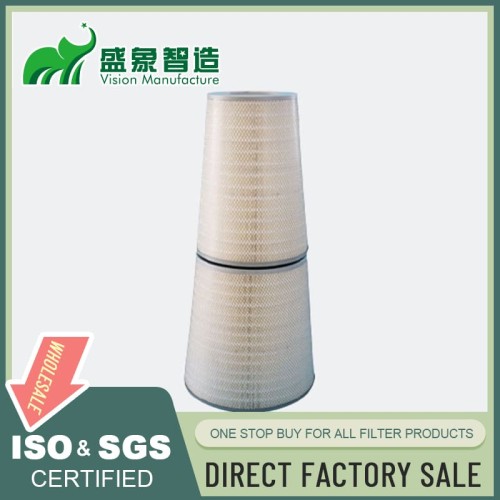

Nanofiber-Coated Cartridges: Submicron Capture in Fine Silica Dust – Cement Milling Case Studies
Introduction
Maintenance engineers and EHS managers in cement milling plants often struggle with submicron silica dust escape, leading to health risks (silicosis), regulatory fines for PM2.5 violations, high differential pressure, and frequent cartridge replacements. Fine silica dust (0.1–1 micron) blinds standard media quickly, raising energy costs and downtime. Nanofiber-coated cartridges add a thin, high-efficiency layer for surface filtration, capturing submicron particles at 99.99% while maintaining low ΔP. This article provides a practical guide to nanofiber-coated cartridges for fine silica dust in cement milling, covering properties, benefits, real case studies, and implementation tips for better capture and compliance.
Nanofiber-Coated Cartridges for Submicron Silica Dust Capture in Cement Milling
Cement milling produces fine silica-rich dust that penetrates standard cartridges, causing health hazards and emission issues. Nanofiber-coated cartridges apply a submicron fiber layer (0.1–0.5 micron diameter) to polyester or spunbond base, shifting to surface loading for superior submicron capture. This coating boosts efficiency to MERV 15–16 without high ΔP, ideal for pulse-jet systems in high-silica environments.
Key Properties of Nanofiber-Coated Cartridges in Silica Dust Applications
Nanofiber coatings enhance performance in fine dust. Core characteristics include:
- Ultra-High Submicron Efficiency: Captures 99.99% of particles <1 micron, reducing silica exposure per OSHA limits.
- Surface Loading: Dust collects on coating, preventing deep penetration and blinding.
- Low Differential Pressure: Coating allows better airflow, reducing ΔP by 30–50% vs. uncoated.
- Excellent Cake Release: Nanofibers promote easy dislodgement during pulsing, extending cleaning intervals.
- Abrasion Resistance: Base media withstands silica scouring, with coating adding durability.
- Long Service Life: Often 18–36 months in cement, reducing replacements vs. standard (12–18 months).
In cement milling with high fine fractions, these properties support lower OPEX and compliance.
Applications in Cement Milling for Fine Silica Dust
Cement mills use cartridges in baghouses on ball mills, separators, and conveyors where submicron silica dominates. Nanofiber coatings suit pulse-jet systems, capturing fines to meet PM2.5 standards while handling abrasive loads in continuous production.
Real-World Case Studies
A cement milling plant in Southeast Asia faced silica escape and blinding in mill baghouses, with ΔP spikes and replacements every 10–14 months, risking OSHA-equivalent health fines.
They upgraded to nanofiber-coated polyester cartridges. Results:
- Submicron capture improved to 99.99%.
- ΔP reduced 40–50%.
- Cartridge life extended to 24–30 months.
- Pulse frequency cut by 55%.
- Annual savings approximately $95,000 in energy and replacements.
- Silica exposure and emissions below regulatory limits.
Recent Industry Context
The global industrial dust collector market is projected to grow at a CAGR of 5.0–5.4% from 2026 to 2030, according to 2026 reports from Grand View Research, Mordor Intelligence, and ResearchAndMarkets, with nanofiber coatings gaining traction in cement for submicron PM2.5 control amid stricter health and emission regulations.
Practical Recommendations
To implement nanofiber-coated cartridges in cement milling:
- Assess dust profile: Measure silica size/distribution to confirm coating need.
- Choose base media: Polyester for abrasion; add nanofiber for fines.
- Match to system: Ensure cartridge dimensions and pulse compatibility.
- Optimize cleaning: Use clean-on-demand at 80–100 psi for release.
- Monitor performance: Track ΔP and inspect quarterly for wear.
- For distributors: Stock nanofiber-coated sizes for quick cement retrofits.
Below is a comparison chart of nanofiber-coated vs. standard cartridges in cement milling:
| Aspect | Nanofiber-Coated | Standard |
|---|---|---|
| Efficiency (Submicron) | 99.99% | 90–95% |
| ΔP Reduction | 40–50% | Baseline |
| Life Extension | 24–30 months | 10–14 months |
| Cost Savings | $95k+/year | Baseline |
Nanofiber-coated cartridges excel in submicron silica capture for cement milling. For dust testing or custom coatings, consult experienced filtration specialists.
About the Author
Written by: Industrial Filtration Application Engineer
10+ years supporting dust collection upgrades in cement, steel, mining, incineration, and aluminum smelting plants across the Middle East, Africa, Indonesia, Vietnam, and Russia.