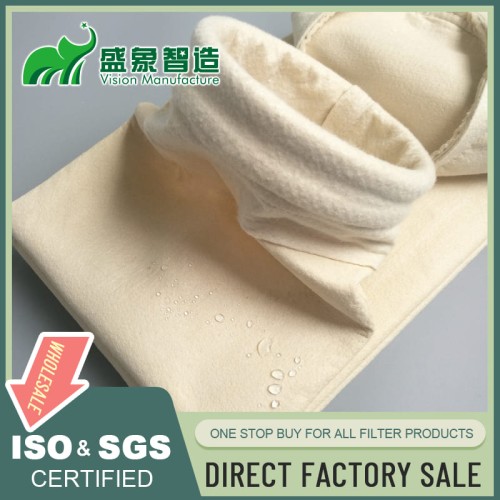

Corrosion Challenges in Chemical Plants: Selecting Acid-Resistant Ryton (PPS) Filter Bags
Introduction
Plant engineers and maintenance supervisors in chemical plants often confront filter bag failures from acidic gases (HCl, SO2, HF), moisture, and fine particulates in drying, reactor venting, and scrubber exhaust, leading to leaks, high pressure drop, reduced efficiency, and non-compliance with emission standards. These issues increase downtime, energy costs, and safety risks in corrosive environments. Acid-resistant Ryton (PPS) filter bags provide superior chemical stability, hydrolysis resistance, and durability for pulse-jet or reverse-air baghouses in chemical applications. This article provides a practical guide to selecting Ryton bags for chemical plant corrosion challenges, covering properties, benefits, real outcomes, and implementation tips for reliable filtration and longer media life.
Ryton (PPS) Filter Bags for Acid-Resistant Chemical Plant Filtration
Chemical processes generate corrosive flue gases and dusts that degrade standard polyester or aramid bags through hydrolysis or acid attack. Ryton (PPS) filter bags excel in pH 1–3 environments at temperatures up to 190°C continuous (220°C surges), resisting sulfuric, hydrochloric, and nitric acids common in chemical venting. These bags suit baghouses in acid gas streams, reducing corrosion-related failures and supporting compliance with EPA or local emission limits in chemical production.
Key Properties of Ryton Bags in Corrosive Chemical Environments
Ryton bags offer targeted advantages for acid-heavy applications. Core characteristics include:
- Outstanding Acid Resistance: Withstands strong acids (HCl, H2SO4) across wide pH, preventing hydrolysis that destroys other synthetics.
- High Temperature Tolerance: Continuous 190°C operation with good oxidation resistance in oxygen-rich streams.
- Hydrolysis Resistance: Low moisture absorption maintains integrity in wet, acidic gases.
- Abrasion Durability: Robust fibers resist chemical dust scouring, extending life.
- Efficient Cake Release: PTFE finishes promote cleaning, maintaining low ΔP.
- Long Service Life: Often 24–48 months in acid conditions, reducing replacements vs. polyester (12–18 months).
In chemical plants with fluctuating pH, these properties support stable performance and lower total cost of ownership.
Applications in Chemical Plant Corrosion Challenges
Chemical plants use baghouses on reactor vents, dryers, and scrubbers where acids and moisture dominate. Ryton bags are ideal for pulse-jet systems handling pigment, fertilizer, or specialty chemical dusts, supporting compliance with OSHA exposure limits and EPA emission standards. The media's resistance minimizes failures in high-corrosion processes common in emerging chemical hubs.
Real-World Case Example
A specialty chemical plant in an emerging market operated pulse-jet baghouses on acidic pigment drying lines. Standard bags hydrolyzed after 10–12 months, causing leaks and pressure spikes that raised energy use and emission risks.
The plant upgraded to Ryton PPS bags with PTFE lamination for release. Results:
- Bag life extended to 30–36 months.
- Differential pressure stabilized 40–50% lower.
- Replacement frequency cut by 65%.
- Annual savings approximately $115,000 in bags, labor, and energy.
- Emission levels consistently below EPA-equivalent standards with no leaks.
Recent Industry Context
The global industrial dust collector market is projected to grow at a CAGR of 5.0–5.4% from 2026 to 2030, according to 2026 reports from Grand View Research, Mordor Intelligence, and ResearchAndMarkets, with chemical sector demand for acid-resistant media rising amid stricter corrosion and emission controls. Ryton PPS bags with composite finishes are increasingly adopted for long-life solutions in high-acid flue gas applications.
Practical Recommendations
To select and implement acid-resistant Ryton bags in chemical plants:
- Assess gas chemistry: Measure pH, acids, moisture, and temperature to confirm Ryton suitability.
- Choose enhancements: Add PTFE lamination for hydrolysis/moisture resistance or singeing for release in sticky dusts.
- Match to system: Ensure bag dimensions and cage materials for corrosive fit.
- Optimize cleaning: Use pulse-jet at 90–110 psi with extended intervals to minimize stress.
- Monitor performance: Track ΔP and inspect quarterly for corrosion or wear.
- For distributors: Stock Ryton bags in common sizes and offer custom lamination for chemical retrofits.
Acid-resistant Ryton bags address corrosion challenges in chemical plants. For gas analysis or custom media, consult experienced filtration specialists.
About the Author
Written by: Industrial Filtration Application Engineer
10+ years supporting dust collection upgrades in cement, steel, mining, incineration, and aluminum smelting plants across the Middle East, Africa, Indonesia, Vietnam, and Russia.