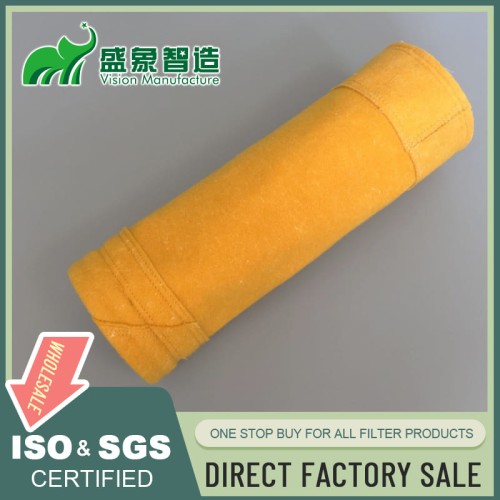

P84 and PTFE Composite Media: Ultra-High-Temp (up to 260°C) Solutions for Incineration Flue Gas
Introduction
Environmental engineers and plant operators in waste incineration facilities often battle filter media failures from extreme flue gas temperatures (240–280°C), acidic gases (SO2, HCl, HF), dioxins, and abrasive heavy metal particulates, leading to leaks, high pressure drop, reduced efficiency, and non-compliance with stringent emission limits. Standard materials like fiberglass degrade under these conditions. P84 (polyimide) & PTFE composite media provide ultra-high-temp stability, chemical resistance, and superior cake release for pulse-jet or reverse-air baghouses in incineration applications. This article provides a practical guide to P84 & PTFE composites for incineration flue gas, covering properties, benefits, real outcomes, and implementation tips for reliable emission control and longer media life.
P84 & PTFE Composite Media for Ultra-High-Temp Incineration Flue Gas
Incineration flue gas contains corrosive acids, dioxins, and heavy metals at temperatures exceeding 260°C, requiring media that withstands thermal stress without shrinkage or embrittlement. P84 & PTFE composite filter media blend polyimide fibers for heat resistance with PTFE lamination for chemical protection and release. This composite maintains integrity at 260°C continuous (280°C surges), reducing acid hydrolysis and dioxin emissions while supporting compliance with EU IED or US EPA MACT standards in waste-to-energy plants.
Key Properties of P84 & PTFE Composites in Incineration Applications
This composite excels in harsh flue gas environments. Core characteristics include:
- Ultra-High Thermal Stability: Continuous operation at 260°C with low shrinkage, preventing bag deformation in hot gas streams.
- Superior Chemical Resistance: PTFE layer repels acids (HCl, SO2, HF) and moisture, avoiding hydrolysis common in fiberglass.
- Excellent Abrasion Tolerance: P84 fibers withstand heavy metal particulates and ash scouring, extending life.
- High Filtration Efficiency: Achieves 99.99% capture on submicron dioxins and fines (MERV 15–16 equivalent).
- Optimal Cake Release: PTFE surface promotes easy dislodgement during pulsing, maintaining low ΔP.
- Long Service Life: Often 36–48 months in incineration, reducing replacements vs. fiberglass (typically 18–24 months).
In incineration plants with fluctuating gas chemistry, these properties support stable performance and lower OPEX.
Applications in Waste Incineration Flue Gas Filtration
Waste incinerators use baghouses downstream of scrubbers to capture particulates, dioxins, and metals from flue gas at 240–280°C. P84 & PTFE composites suit pulse-jet systems in municipal solid waste, hazardous waste, or medical waste facilities, supporting compliance with ultra-low emission limits (e.g., dioxins <0.1 ng TEQ/Nm³). The media's durability reduces downtime in high-throughput operations common in urban incinerators.
Real-World Case Example
A municipal waste incinerator in an emerging market operated pulse-jet baghouses on flue gas lines. Standard fiberglass bags failed after 18–20 months from acid corrosion and thermal stress, causing emission spikes and pressure rises that reduced boiler efficiency.
The plant upgraded to P84 & PTFE composite bags for enhanced resistance. Results:
- Media life extended to 42–48 months.
- Differential pressure stabilized 40–50% lower.
- Dioxin and particulate emissions reduced below 0.1 ng TEQ/Nm³ and 5 mg/Nm³.
- Pulse frequency cut by 50%.
- Annual savings approximately $130,000 in media, energy, and compliance costs.
Recent Industry Context
The global industrial dust collector market is projected to grow at a CAGR of 5.0–5.4% from 2026 to 2030, according to 2026 reports from Grand View Research, Mordor Intelligence, and ResearchAndMarkets, with waste incineration driving demand for ultra-high-temp media amid stricter dioxin and particulate regulations. P84 & PTFE composites are increasingly adopted for long-life solutions in high-corrosion flue gas applications.
Practical Recommendations
To implement P84 & PTFE composites in incineration flue gas:
- Assess gas profile: Measure temperature, acids, and particulates to confirm composite suitability.
- Choose finishes: Add ePTFE lamination for maximum release in sticky fumes.
- Match to system: Ensure bag dimensions and cage materials for high-temp fit.
- Optimize cleaning: Use pulse-jet at 90–110 psi with extended intervals to minimize stress.
- Monitor closely: Track ΔP and inspect quarterly for corrosion or wear.
- For distributors: Stock P84 & PTFE bags in common sizes for quick incineration retrofits.
P84 & PTFE composite media deliver ultra-high-temp solutions for incineration flue gas. For gas analysis or custom media, consult experienced filtration specialists.
About the Author
Written by: Industrial Filtration Application Engineer
10+ years supporting dust collection upgrades in cement, steel, mining, incineration, and aluminum smelting plants across the Middle East, Africa, Indonesia, Vietnam, and Russia.