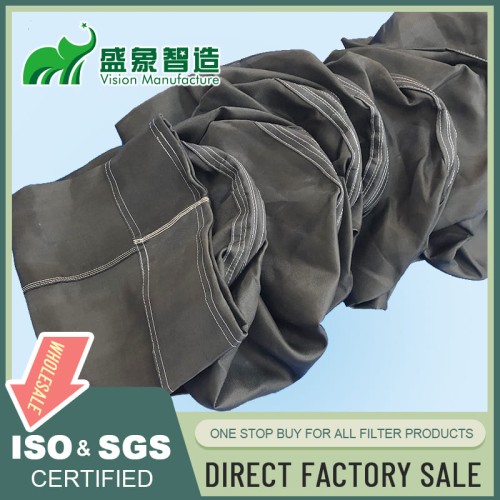

Fiberglass Filter Bags for Extreme Heat: Performance in African Coal-Fired Boilers
Introduction
Boiler house engineers and maintenance supervisors in African coal-fired power plants often face severe filter bag degradation from high exhaust gas temperatures (typically 200–260°C continuous, with surges to 280°C+), combined with abrasive fly ash, sulfur compounds, and alkaline particulates. Standard polyester or aramid bags fail prematurely under these conditions, leading to leaks, high differential pressure, increased fan energy, and frequent shutdowns for replacements. Fiberglass filter bags, with their inherent high-temperature stability and chemical resistance, provide a robust solution for pulse-jet or reverse-air baghouses in extreme-heat coal boiler applications. This article delivers a practical overview of fiberglass filter bags in African coal-fired boilers, including material properties, performance benefits, real-world results, and selection guidance for long-term reliability.
Fiberglass Filter Bags for Extreme Heat in Coal-Fired Boilers
African coal-fired power stations burning high-ash, high-sulfur coals produce hot flue gases laden with abrasive fly ash that quickly destroy non-high-temp media. Fiberglass filter bags (woven or needled, often with PTFE or silicone finishes) maintain structural integrity at continuous temperatures up to 260°C (short peaks to 290°C), resisting thermal shrinkage, oxidation, and chemical attack from SO2/SO3. These bags suit reverse-air or shaker baghouses common in older African plants, offering extended life and consistent low emissions in extreme heat environments.
Key Properties of Fiberglass Bags in High-Temperature Coal Applications
Fiberglass media excels where synthetic fibers melt or degrade. Primary attributes include:
- Extreme Temperature Resistance: Continuous duty at 260°C, with silicone or PTFE coatings extending short-term tolerance to 290°C without softening or melting.
- Non-Flammable & Low Thermal Shrinkage: Inherent flame resistance and minimal dimensional change under heat cycles prevent bag-to-cage abrasion or leaks.
- Chemical & Acid Resistance: Withstands sulfur oxides, alkalis, and coal-derived acids; PTFE finishes add hydrophobicity and corrosion protection.
- Abrasion Tolerance: Woven fiberglass withstands fly ash scouring; needled felts offer additional mechanical strength.
- Efficient Dust Cake Formation: Surface treatments promote even cake build-up and effective release during cleaning, maintaining airflow.
- Long Service Life Potential: With proper coatings and cleaning, fiberglass bags often last 24–48 months in hot coal boiler exhaust.
In African coal plants with limited cooling capacity, these properties frequently deliver 2–3× longer bag life than aramid alternatives.
Applications in African Coal-Fired Boilers
Coal-fired boilers in South Africa, Botswana, Zimbabwe, and other regions use baghouses for fly ash capture from stoker or pulverized coal units. Fiberglass bags are standard in reverse-air or pulse-jet systems where gas temperatures exceed 200°C after economizers. They support compliance with tightening particulate and SO2 emission rules while handling variable coal quality and ash loads in baseload operations. The material's durability reduces change-out frequency in remote sites with limited spare parts access.
Real-World Case Example
A 600 MW coal-fired power station in South Africa operated reverse-air baghouses on boiler exhaust. High gas temperatures (230–250°C) and abrasive fly ash caused standard fiberglass bags to embrittle and fail after 12–18 months, with pinholes near cage supports and rising differential pressure. Frequent bag replacements disrupted generation and increased costs.
The plant upgraded to PTFE-coated, woven fiberglass bags with silicone finish for added release. Results:
- Bag life extended to 36–42 months.
- Differential pressure reduced 30–40% on average.
- Replacement frequency cut by 60%.
- Annual savings approximately $110,000 in bags, labor, and avoided downtime.
- Particulate emissions stayed consistently below local standards.
Recent Industry Context
The global industrial dust collector market is projected to grow at a CAGR of 5.0–5.4% from 2025 to 2030, according to 2025 reports from Grand View Research, Mordor Intelligence, and ResearchAndMarkets, with coal-fired power in Africa driving demand for high-temperature media amid stricter emission controls and plant life extensions. Fiberglass bags with advanced coatings are increasingly specified for extreme-heat coal boilers to improve reliability and reduce OPEX in resource-constrained regions.
Practical Recommendations
To select and operate fiberglass filter bags in African coal boilers:
- Confirm gas conditions: Measure temperature, acid dew point, and ash composition to choose appropriate coating (PTFE for acid/corrosion, silicone for release).
- Match bag construction: Use woven fiberglass for high abrasion; needled felts for added thickness and efficiency.
- Optimize cleaning: For reverse-air systems, maintain gentle cleaning cycles; for pulse-jet, use 90–110 psi with longer intervals to minimize mechanical stress.
- Inspect regularly: Check for embrittlement, pinholes, or coating wear every 6–12 months; replace at 70–80% of expected life.
- Ensure cage compatibility: Use stainless steel or high-temp coated cages with proper ring spacing to prevent bag damage.
- For distributors: Stock coated fiberglass bags in common sizes and offer rapid delivery for planned outages in African power plants.
Fiberglass filter bags deliver proven performance for extreme heat in African coal-fired boilers. For gas analysis or baghouse optimization, consult specialized filtration engineers.
About the Author
Written by: Industrial Filtration Application Engineer
10+ years supporting dust collection upgrades in cement, steel, mining, incineration, and aluminum smelting plants across the Middle East, Africa, Indonesia, Vietnam, and Russia.