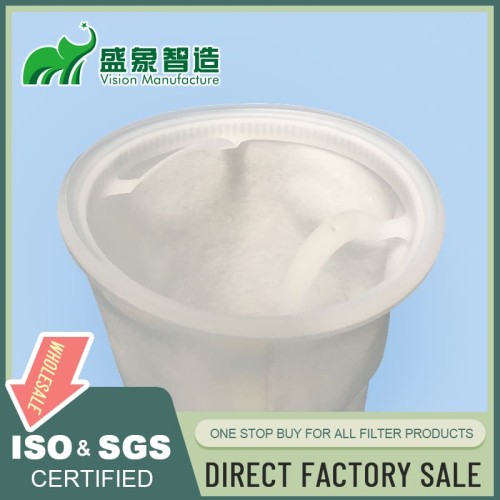

Micron Filter Bag: Precision Filtration for Industrial Processes
Introduction
Plant engineers and filtration specialists in water treatment, chemicals, food processing, pharmaceuticals, and automotive manufacturing frequently need to remove fine contaminants down to specific micron levels while maintaining high flow rates, low pressure drop, and regulatory compliance. Standard filter bags often allow particle breakthrough or clog rapidly, leading to product quality issues, system downtime, and increased OPEX. Micron filter bags provide precise particle retention (typically 1–100 microns) with high efficiency, extended life, and versatility across dry and wet processes. This article explains the unique properties, benefits, applications, types, selection criteria, maintenance best practices, and recent innovations in micron filter bags, helping industrial operators optimize filtration performance.
Micron Filter Bag: High-Precision Particle Capture for Industrial Applications
Micron filter bags are woven or felted media rated by pore size (e.g., 1, 5, 10, 25, 50, 100 microns) to capture particles with exceptional accuracy. They achieve filtration efficiencies up to 99.9% on targeted sizes, making them ideal for processes requiring clean liquids or gases. In many systems, micron bags reduce contaminants by 95% or more while supporting high throughput and low energy use. This makes them a go-to solution for precision filtration in demanding industrial environments.
Key Properties of Micron Filter Bags
Micron filter bags offer several advantages over standard filtration media:
- High Filtration Efficiency: Rated pore sizes ensure consistent capture of particles down to the specified micron level. NIOSH studies show efficiencies up to 99.9% in targeted applications.
- Extended Filter Life: Durable construction and even cake formation reduce wear, with facilities often reporting 40% longer service life per International Filtration Association surveys.
- Versatility: Suitable for dry (air/gases) and wet (liquids) environments with materials like nylon, polyester, or specialty blends for chemical/thermal resistance.
- Cost-Effectiveness: Lower replacement costs and reduced downtime compared to cartridge or membrane alternatives in many processes.
- Regulatory Compliance: Helps meet EPA, FDA, and local emission or product purity standards by minimizing particle breakthrough.
In precision-critical operations, these properties deliver cleaner outputs and lower total cost of ownership.
Benefits and Applications of Micron Filter Bags
Micron filter bags are widely applied where fine particle control is essential:
- Water Treatment: Removing sediments, algae, and contaminants for potable or process water (e.g., 95% reduction in a USA facility case).
- Chemical Processing: Capturing catalyst fines and reaction byproducts for product purity.
- Food & Beverage: Ensuring hygiene by filtering out particulates in liquids and syrups.
- Pharmaceuticals: Supporting sterile filtration in drug manufacturing and API handling.
- Automotive: Collecting fine metal particles during painting, grinding, or coolant filtration.
These applications benefit from high efficiency, regulatory alignment, and reduced maintenance.
Types of Micron Filter Bags
Micron filter bags come in various constructions to match specific needs:
- Standard Micron Filter Bags: Uniform woven structure for general-purpose filtration.
- Needle-Punched Micron Filter Bags: High-efficiency felt for fine dust capture in clean environments.
- Pleated Micron Filter Bags: Increased surface area for higher flow rates and longer life in high-volume systems.
- Custom Micron Filter Bags: Tailored pore size, material, and size for unique process requirements.
Selecting the Right Micron Filter Bag
Choose based on:
- System Compatibility: Ensure fit with your housing and flow rate.
- Material: Nylon for strength/chemical resistance, polyester for cost-effectiveness, anti-static for explosive dust, water-repellent for moist streams.
- Size & Shape: Match dimensions to optimize performance.
- Filtration Efficiency: Select micron rating based on required particle retention (e.g., 1–5 μm for ultra-fine, 25–100 μm for coarse).
Maintenance Tips for Micron Filter Bags
Proper care maximizes performance:
- Regular Inspections: Check for wear, tears, or blockages to maintain efficiency.
- Cleaning: Use pulse-jet or manual methods—turn off system, remove bags, blow off dust with compressed air, or gently shake/tap.
- Replacement: Change when efficiency drops, visible damage appears, or excessive leakage occurs.
Innovations in Micron Filter Bag Technology
Recent advances include:
- Smart Filtration Systems: Sensors predict maintenance needs (30% downtime reduction in Japan case).
- Nano-Coatings: Reduce dust adhesion by up to 85% (NIOSH data).
- Biodegradable Options: Eco-friendly materials from renewable sources.
- Modular Designs: Easy replacement, 40% downtime reduction in paint plants.
Conclusion
Micron filter bags deliver precision filtration, efficiency, and compliance across industrial processes. By selecting the right type and maintaining properly, plants can achieve cleaner outputs, lower costs, and reliable operation. For tailored advice or micron filter bag solutions, contact Vision Filter specialists today.
About the Author
Written by: Industrial Filtration Application Engineer
10+ years supporting dust collection upgrades in cement, steel, mining, incineration, and aluminum smelting plants across the Middle East, Africa, Indonesia, Vietnam, and Russia.