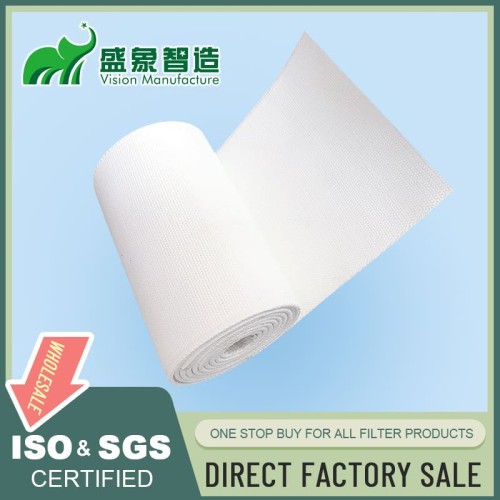
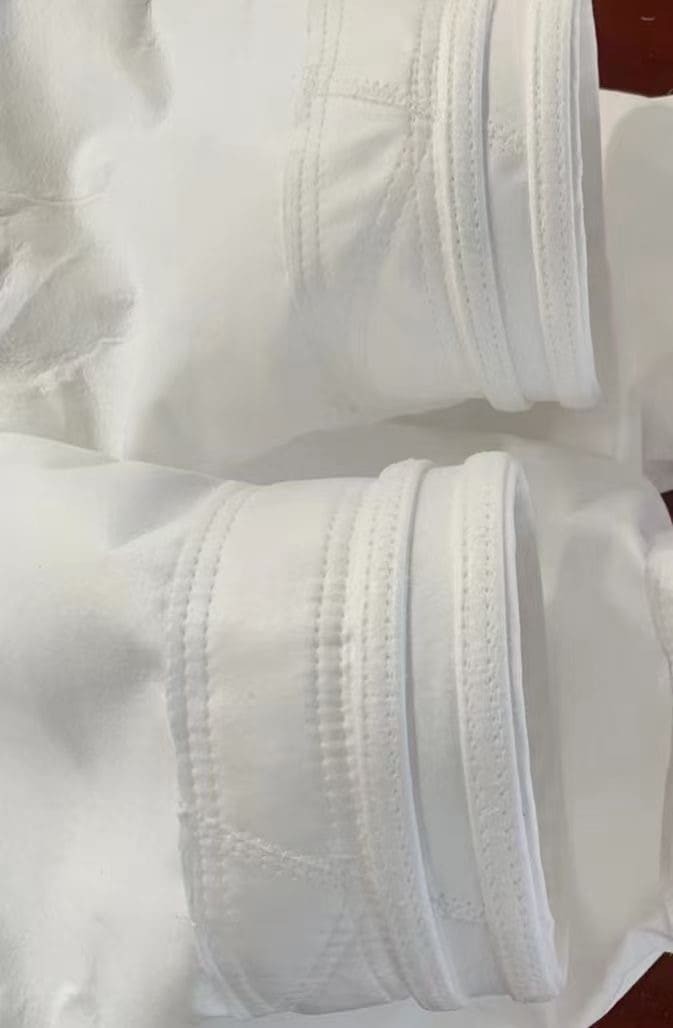
Weft Knitted Fabrics Unlocks Versatility in Industrial Filtration and Beyond
Weft knitted fabrics play a pivotal role in the industrial landscape, particularly in filtration and related industries. Their unique construction allows for versatility in applications ranging from automotive to aerospace, setting the stage for a comprehensive exploration of their multifaceted benefits and uses.
Understanding Weft Knitting
Weft knitting involves:
-
Horizontal Loop Interlocking: Unlike its counterpart warp knitting, weft knitting creates fabric by interlocking loops horizontally, resulting in high elasticity and flexibility.
-
Key Characteristics: Elasticity, air permeability, and dimensional stability make weft knitted fabrics particularly suited for various industrial applications.
The Weft Knitting Process
Vision Filter employs:
-
Circular and Flat Knitting Machines: Producing a wide range of fabric structures tailored to meet industrial demands.
-
Innovative Production: Ensuring both functionality and quality through advanced knitting techniques.
Properties of Weft Knitted Fabrics
Weft knitted fabrics are distinguished by:
-
Elasticity: Enabling complex filter shapes and multi-layered structures for improved filtration efficiency.
-
Air Permeability: Allowing for efficient particle capture and flow dynamics in filtration applications.
-
Dimensional Stability: Ensuring durability and longevity in harsh industrial conditions.
-
Customization: Easily tailored for specific applications.
Applications in Industrial Filtration
Weft knitted fabrics find extensive use in:
-
Air Filtration: Ensuring cleaner air in HVAC systems, automotive air filters, and industrial dust collection.
-
Liquid Filtration: Capturing contaminants in water treatment, chemical processing, and food and beverage industries.
-
Automotive and Oil & Gas: Improving engine performance and maintaining purity in various systems.
Advantages of Weft Knitted Fabrics in Filtration
In the realm of industrial filtration, weft knitted fabrics offer numerous advantages:
-
Complex Shape Formation: Their ability to form complex three-dimensional shapes enhances particle capture efficiency and superior flow dynamics.
-
Cost-Effectiveness: Efficient production processes make them an economically viable option for large-scale industrial applications.
-
Durability: Withstanding harsh environments while maintaining performance over time.
Other Industrial Applications of Weft Knitted Fabrics
Beyond filtration:
-
Geotextiles: Used in soil stabilization, erosion control, and drainage systems.
-
Automotive Interiors: Providing comfort, durability, and aesthetic appeal.
-
Sportswear and Medical Textiles: Offering breathability, stretch, and hygiene, crucial in these sectors.
-
Aerospace: Technical clothing and other specialized applications where flexibility and durability are paramount.
Choosing the Right Weft Knitted Fabric
Selecting the appropriate weft knitted fabric involves:
-
Application Requirements: Understanding the environmental conditions and performance needs of the specific application.
-
Fiber Selection: Choosing the right fibers for the use case, whether for high-temperature resistance, chemical compatibility, or other properties.
-
Knit Structure: Tailoring the structure for optimal performance, including elasticity, porosity, and strength.
-
Finishing Treatments: Enhancing fabric properties with coatings, finishes, or other treatments for specific applications.
Innovations in Weft Knitting Technology
Recent advancements include:
-
3D Knitting: Creating complex, one-piece structures that enhance filtration efficiency and reduce waste.
-
Advanced Fiber Materials: Integrating high-performance fibers to enhance fabric properties for challenging industrial environments.
Environmental and Sustainability Aspects
Vision Filter is committed to:
-
Energy-Efficient Production: Reducing the environmental footprint through efficient manufacturing processes.
-
Sustainable Fibers: Utilizing eco-friendly materials like recycled polyester or organic cotton.
-
Recyclability and Biodegradability: Minimizing waste through recycling or biodegradable options.
Maintenance and Care of Weft Knitted Filters
Proper maintenance and care are crucial to:
-
Cleaning and Regeneration: Following recommended practices to maintain filter efficiency over time.
-
Storage and Handling: Proper techniques to prevent degradation and ensure longevity.
Case Studies: Weft Knitted Fabrics in Action
Real-world applications:
-
Automotive Industry: Where weft knitted fabrics improve air intake system performance, reducing particle contamination.
-
Environmental Applications: Geotextiles demonstrating stability and drainage efficiency in various projects.
Future Trends in Weft Knitted Fabrics
The future of weft knitting looks promising:
-
Smart and Reactive Fabrics: Revolutionizing applications with responsive properties for filtration and beyond.
-
Expanded Use Cases: Exploring new industries and applications where weft knitted fabrics can offer unique benefits.
Conclusion
Weft knitted fabrics are essential to the ongoing evolution of industrial applications, offering unmatched versatility and performance. Their diverse properties and adaptability make them invaluable in a wide range of sectors. Vision Filter remains a key player in this field, offering expertise in selecting and utilizing advanced filtration solutions.
Explore how Vision Filter can guide you in selecting the perfect weft knitted fabric for your industrial needs. Contact Us to discuss your unique requirements and ensure top-tier performance in your operations.