
2025 Guide to Bag Filter Dust Collectors: Optimize Industrial Air Quality with Proven Solutions
Introduction: Why Bag Filter Dust Collectors Matter in 2025
In today’s industrial landscape, maintaining clean air is critical for compliance, worker safety, and operational efficiency. Bag filter dust collectors are essential tools for industrial air purification, capturing harmful dust particles to ensure a healthier workplace. According to a 2024 industry report by Grand View Research, the global dust collector market is projected to grow at a CAGR of 5.8% through 2030, driven by stricter environmental regulations and rising demand for sustainable manufacturing.
This guide explores how industrial dust collection systems work, their types, and how to select the right bag filter dust collector for your industry—whether you’re in cement production, pharmaceuticals, or woodworking. Let’s dive into the essentials of optimizing air quality with cutting-edge filtration technology.
What Are Bag Filter Dust Collectors?
Bag filter dust collectors are advanced filtration systems designed to trap dust and pollutants, ensuring industrial air purification. They consist of:
-
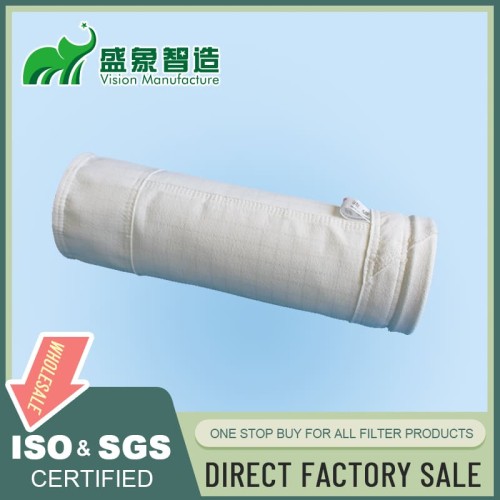
Filter Bag Assembly: Dust-laden air passes through specialized filter bags, capturing particles as small as 0.3 microns, improving air quality.
-
Housing and Cleaning System: Automated cleaning mechanisms (e.g., pulse jet, reverse air) maintain filter efficiency, reducing downtime.
These systems are widely used in industries like mining, food processing, and chemical manufacturing to meet OSHA and EPA emission standards.
Types of Bag Filter Dust Collectors: Which Suits Your Needs?
Choosing the right industrial dust collection system depends on your operational requirements. Here’s a breakdown of the main types:
-
Pulse Jet Bag Filters
-
How It Works: Uses high-pressure compressed air to dislodge dust, enabling continuous operation.
-
Pros:
-
High efficiency for large dust volumes (up to 99.9% filtration).
-
Minimal downtime due to automated cleaning.
-
-
Cons: Higher upfront costs due to compressed air systems.
-
Best For: Cement plants, pharmaceutical cleanrooms, and high-dust environments.
-
Example: A 2024 case study from a Texas cement plant showed a 30% reduction in emissions using pulse jet filters.
-
-
Reverse Air Bag Filters
-
How It Works: Low-pressure reverse airflow cleans filter bags, saving energy.
-
Pros:
-
Energy-efficient, reducing operational costs by up to 20% (per ASHRAE data).
-
Cost-effective for long-term use.
-
-
Cons: Not suitable for heavy dust loads.
-
Best For: Woodworking shops and light metal processing.
-
-
Shaker Bag Filters
-
How It Works: Mechanically shakes bags to remove dust, ideal for small-scale operations.
-
Pros:
-
Simple design, low initial costs.
-
Easy to maintain.
-
- <div dir="ltr" class="css-146c3p1 r-bcqeeo r-1ttztb7 r-qvutc0 r-37j5jr r-a023e6 r-rjixqe r-16dba41" style="background-color:transparent;border:0px solid #000000;font-size:15p
-
Published on 24-10-2024
| 290 Views
Leave a comment